
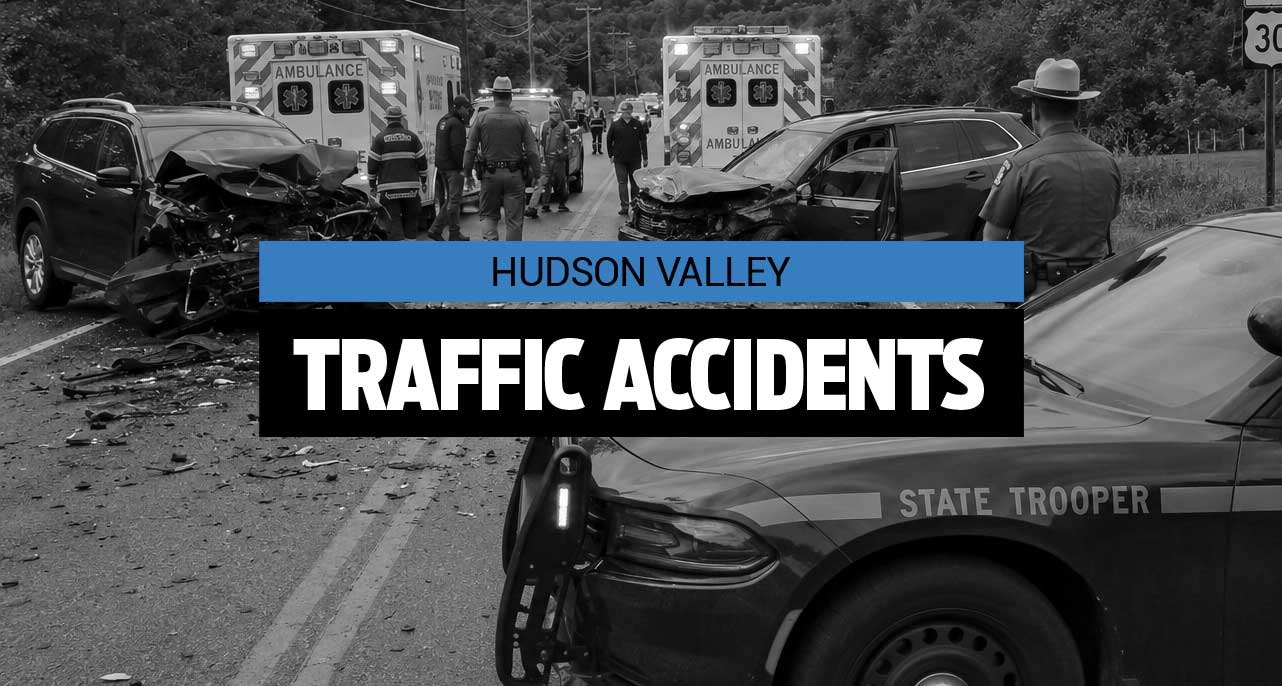
The Hudson Valley offers some of the most scenic drives in New York State, but its roadways are also fraught with unique hazards. From high-speed corridors like the Taconic State Parkway and the New York State Thruway to winding, narrow rural roads, devastating accidents are a frequent reality for local drivers.
When a severe collision happens, the path to recovery involves more than just medical treatment—it requires navigating complex insurance laws, investigating liability, and fighting for fair compensation. At O’Connor & Partners, PLLC, our legal team understands the specific dangers of Hudson Valley roads. Here is an overview of what drivers need to know when tragedy strikes.
Recent Tragedies Highlight Regional Road Hazards
Recent accident reports from across the region underscore how quickly a routine drive can turn catastrophic, whether on a quiet country road or a major highway:
- Rural Road Dangers: On July 1, 2026, at approximately 7:55 a.m., State Police were called to Albany Post Road in the town of Shawangunk for a report of a one-car crash. A preliminary investigation determined that a white Chevrolet Colorado was traveling northbound when the driver failed to navigate a curve near the intersection of Old Galeville Road. The vehicle collided with a guide rail, struck a tree, and the driver was ejected through the windshield. Because the driver was not wearing a seatbelt at the time of the crash, he was airlifted to Westchester Medical Center for serious injuries.
- Highway Disabled Vehicle Hazards: High-speed parkways leave very little room for error when a vehicle breaks down. On February 11, 2026, at approximately 11 p.m., a fatal collision occurred southbound on the Taconic State Parkway near mile marker 59.1 in the Town of Clinton. A 34-year-old man from Chappaqua, New York, was outside of his disabled 2024 Lexus in the right lane when he was struck by a 2025 GMC. The GMC then continued southbound and struck the disabled Lexus, which was partially parked on the shoulder. The victim was transported to Mid-Hudson Regional Hospital with serious injuries and was later pronounced deceased.
Understanding Liability in Different Crash Scenarios
Determining who is at fault after a crash requires a thorough investigation of the scene, vehicle data, and traffic laws. Liability dynamics shift drastically depending on the nature of the accident.
| Accident Type | Primary Causes & Considerations | Liability & Insurance Strategy |
| Single-Vehicle Crashes | Often caused by adverse weather, avoiding animals, or defective vehicle parts (like blown tires or faulty steering). | While the driver is typically blamed, third-party liability may exist if a municipality failed to maintain the road or a manufacturer produced a defective auto part. |
| Disabled Vehicle Collisions | Frequently occur on narrow highway shoulders when oncoming drivers are distracted, speeding, or driving impaired. | Approaching drivers have a duty to yield or move over. If an oncoming vehicle strikes a disabled car or pedestrian, the moving driver is usually held liable, though comparative negligence may be argued if the disabled car was not fully off the roadway. |
| Multi-Vehicle Pileups | Commonly triggered by sudden braking on the Thruway or Taconic, exacerbated by tailgating and poor visibility. | Requires extensive accident reconstruction. Multiple insurance policies will be involved, and fault is often divided among several drivers under New York’s comparative negligence laws. |
The Role of Seatbelts and Comparative Negligence
New York is a “comparative negligence” state. This means that if you are injured in an accident, your financial recovery can be reduced by your percentage of fault. Insurance companies heavily leverage this rule to minimize their payouts.
For example, if you are struck by a driver but you were not wearing your seatbelt at the time of the crash, the defense will raise the “seatbelt defense.” They will argue that while their driver caused the accident, your failure to wear a seatbelt caused or worsened your injuries. If a jury agrees, your total compensation could be significantly reduced.
Protecting Your Legal Rights After a Crash
If you or a loved one is involved in a severe motor vehicle accident, taking immediate action is critical to preserving your right to compensation:
- Call 911 and Secure a Police Report: An official state or local police report is the foundational document of your claim.
- Seek Immediate Medical Attention: Get a full trauma evaluation. Severe injuries, including traumatic brain injuries (TBIs) and internal bleeding, may not show immediate symptoms due to shock and adrenaline.
- Preserve Evidence: Do not let the insurance company rush to scrap a totaled vehicle. It may contain vital “black box” data or evidence of mechanical failure.
- Silence is Golden: Do not give a recorded statement to the other driver’s insurance company without legal representation. They are trained to extract statements that can be used to shift the blame onto you.
The trial attorneys at O’Connor & Partners, PLLC have extensive experience investigating catastrophic collisions across Ulster, Dutchess, and Orange counties. We handle the aggressive insurance adjusters, navigate complex New York liability laws, and fight relentlessly for the maximum compensation our clients deserve.