
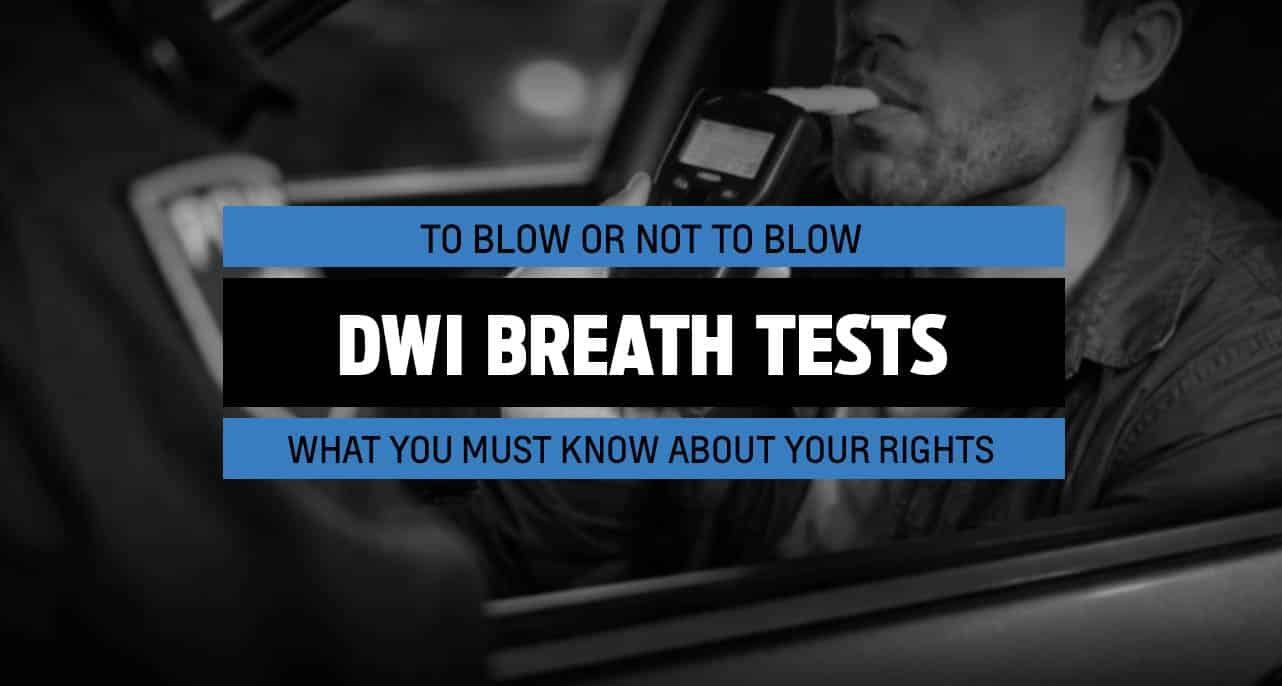
What You Must Know About Your Rights, Risks, and Defense Strategies
Getting pulled over under suspicion of impaired driving is one of the most stressful moments a driver can face. Once law enforcement suspects you of Driving While Intoxicated (DWI), one of the critical decisions you may confront is whether to take a breath test (“blow”) or refuse it. The choice you make can significantly impact your legal outcome — both in your criminal charge and in related administrative penalties.
At O’Connor & Partners, PLLC, our experienced DWI defense attorneys help clients understand the legal landscape of breath testing, including implied consent laws, penalties for refusal, and how test results can affect your case.
Understanding Implied Consent Laws
When you get a driver’s license in New York State, you also agree — by law — to what’s known as implied consent. That means if an officer lawfully stops you, arrests you for suspicion of DWI, and then requests a chemical test to measure your Blood Alcohol Concentration (BAC), you’ve already consented to take that test. Refusing it triggers legal consequences, even if you ultimately aren’t convicted of DWI.
The most common tests include:
- Breath tests – performed at a police station with machines that are required to be calibrated and certified;
- Blood tests – often drawn in a medical setting;
- Urine tests – less common but still used in limited circumstances.
Importantly, implied consent doesn’t apply to all roadside tests — such as preliminary breath test (PBT) or field sobriety tests — but it does apply once an officer formally arrests you.
What Happens If You Blow?
Taking the breath test has both pros and cons:
Pros:
- Provides chemical evidence that can be challenged later;
- May help in New York State, where refusal carries harsher penalties;
- Keeps you compliant with implied consent laws.
Cons:
- A BAC above the legal limit can be powerful evidence against you;
- Breath tests, while useful, are not infallible — errors, calibration issues, and procedural mistakes can affect accuracy;
- Once you provide a sample, that data can be used in court without much room for contest.
In many DWI cases, a breathalyzer result becomes a centerpiece of the prosecution’s case because it provides a quantifiable BAC number. However, obtaining a high BAC reading can drastically weaken your defense.
What Happens If You Refuse to Blow?
Contrary to what many believe, you can legally refuse a post-arrest breath test, but that decision carries specific consequences:
Administrative Penalties
- Driver’s license revocation: If you lose the Administrative Hearing, a civil proceeding held by the DMV, New York State will impose an automatic license revocation for one year. This can possibly be longer if you have a prior offense within five (5) years.
- Fines and fees: In New York State there will be additional fee’s should the motorist lose at the Administrative Hearing.
Criminal or Evidentiary Impact
- Your refusal can be admitted in court as evidence that you chose not to provide evidence against yourself — prosecutors argue it implies guilt.
- Refusal doesn’t prevent a DUI/DWI charge from moving forward; law enforcement still can convict you based on officer observations, testimony, and other evidence – this is known as proving the DWI under the Comon Law theory.
Key Myths About Blow vs. Not Blow
There are many misconceptions surrounding breath tests:
1. “If I refuse, I can’t be convicted.”
False. Even without chemical test results, prosecutors may rely on the officer’s observations, driving behavior, field sobriety tests, and other evidence documented from the traffic stop – this is the Common Law theory mentioned previously.
2. “Refusal eliminates all consequences.”
Wrong. New York State can still revoke your license and admit the refusal as evidence.
3. “Preliminary roadside breath tests are the same as post-arrest breath tests.”
Not true. Preliminary Breath Tests (PBTs) are only used to establish probable cause and usually aren’t admissible later; refusal doesn’t trigger implied consent penalties.
Understanding these technical differences is critical — and it’s why having an experienced attorney is invaluable.
Considerations Before Deciding
So, should you blow or not?
There is no one-size-fits-all answer. Factors that influence the decision include:
- Your level of impairment
- Prior DWI convictions or refusals
- Whether the operator has a specialty license
- Whether law enforcement followed all implied consent protocols
- Your long-term driving and legal interests
A strategic refusal might protect you from inculpatory evidence in some circumstances. In other cases, blowing and then challenging the result through motions targeting procedural errors or device calibration issues offers a better defense path.
How an Experienced DWI Defense Lawyer Helps
At O’Connor & Partners, PLLC, our DWI attorneys know the nuances of breath tests, implied consent laws, and how prosecutors build their cases. We can:
- Analyze whether your implied consent rights were properly administered
- Evaluate whether law enforcement had lawful cause for testing
- Challenge inaccurate or retaliatory evidence
- Negotiate lower charges or alternative sentencing outcomes
- Represent you in DMV hearings to protect your driving privileges
Whether you blew into a breathalyzer, refused, or are still deciding, a strong legal strategy can make all the difference.
Your Rights, Your Future, Your Decision
The choice to blow or not blow during a DWI arrest is high-stakes and deeply personal. Understanding implied consent laws, penalties for refusal, and how evidence will be used is crucial. While refusal protects you from potentially incriminating chemical evidence, it also triggers its own set of penalties — including license suspension and revocation.
If you or a loved one are facing DWI charges after a breath test or refusal, don’t leave your future to chance. Contact O’Connor & Partners, PLLC to discuss your case and build the most effective defense tailored to your unique circumstances.