
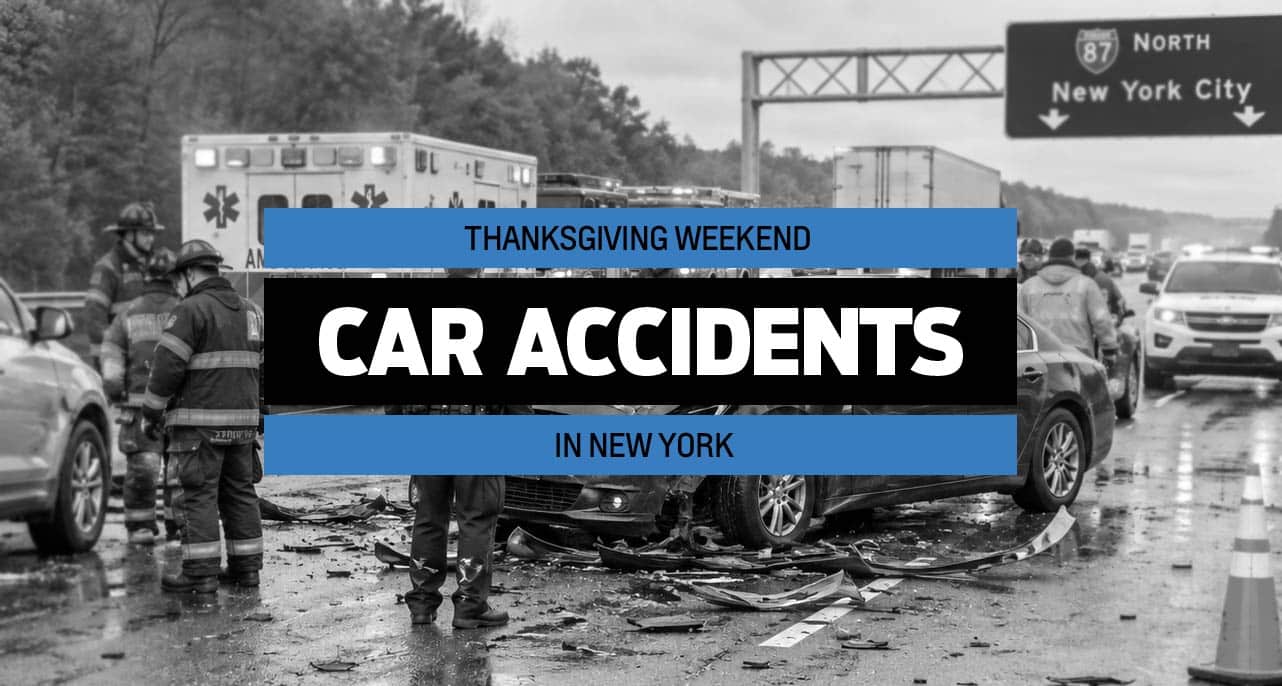
Thanksgiving is one of the busiest travel periods of the year. Families travel across New York to spend the holiday together, roads become congested, and many drivers make long journeys after days filled with celebrations, late nights, and disrupted routines.
But the trip home can be just as dangerous as the drive to the Thanksgiving gathering. Drivers returning on Sunday or Monday may face heavy traffic, fatigue, changing weather conditions, and pressure to get back to work or school the following day.
For Thanksgiving 2026, AAA projects that approximately 81.5 million Americans will travel at least 50 miles from home between November 24 and November 30. An estimated 72.9 million are expected to travel by car. AAA and INRIX identify Sunday and Monday as particularly busy return-travel days, with afternoon and early-evening congestion expected to be especially challenging. New York is among the major metropolitan areas where traffic could exceed twice normal congestion levels on certain routes.
These conditions do not automatically cause accidents, but they can make safe driving more difficult. When a driver responds carelessly to congestion, drives while distracted, speeds, or gets behind the wheel while exhausted, the consequences can be serious.
If you or a family member is injured in a Thanksgiving weekend car accident in New York, understanding how the crash happened and what legal options may be available is important.
Why Thanksgiving Weekend Creates Dangerous Driving Conditions
Holiday traffic brings together drivers with different levels of experience, unfamiliar routes, packed vehicles, and tight travel schedules. Some people are driving several hours to visit relatives, while others are making shorter trips between homes, restaurants, hotels, and shopping destinations.
The combination can create several risks.
1. Highway Congestion and Sudden Traffic Slowdowns
Heavy traffic is one of the most predictable Thanksgiving driving hazards. Even when traffic is moving steadily, sudden slowdowns can create dangerous situations.
A driver traveling at highway speed may have little time to react when vehicles ahead begin braking. If the driver behind is following too closely, looking at a phone, or traveling too fast for the conditions, a rear-end collision may follow.
On New York highways and parkways, holiday congestion can lead to:
- Rear-end collisions involving multiple vehicles.
- Chain-reaction crashes when traffic stops suddenly.
- Unsafe lane changes as drivers try to avoid delays.
- Sideswipe accidents involving vehicles merging into crowded lanes.
- Collisions near highway entrances, exits, and toll facilities.
The risk is not limited to major highways. Congested local roads, intersections, and commercial areas can also become dangerous as travelers approach their destinations.
AAA’s 2026 forecast identifies Tuesday and Wednesday before Thanksgiving as major departure days, with Sunday, November 29, and Monday, November 30, expected to be particularly busy for return travel. Afternoon and early-evening periods are generally expected to experience the heaviest congestion.
For drivers traveling through the Hudson Valley, this is a reason to allow extra time and avoid treating a delayed journey as an emergency.
2. Distracted Driving During Holiday Travel
Distracted driving is a serious concern throughout the year, but holiday travel can introduce additional distractions.
Drivers may use navigation applications to find unfamiliar destinations, check traffic conditions, respond to messages from family members, or adjust entertainment systems during long journeys. Passengers may also create distractions, particularly when children are in the vehicle.
Even a brief distraction can matter when traffic is slowing or vehicles are changing lanes.
Under New York Vehicle and Traffic Law § 1225-c, drivers generally cannot use a hand-held mobile telephone to engage in a call while operating a moving vehicle on a public highway. Vehicle and Traffic Law § 1225-d prohibits using a portable electronic device while operating a motor vehicle when it is in motion, subject to statutory exceptions.
A driver does not have to receive a ticket for distracted driving to potentially be held responsible for a collision. A civil injury claim focuses on whether the driver’s conduct was negligent and caused the injuries.
Evidence that may help establish distraction includes:
- Cell phone records and available device data.
- Witness statements.
- Dashcam or nearby surveillance footage.
- Police accident reports.
- Statements made by the driver after the collision.
- Available vehicle data and accident reconstruction evidence.
Read more about distracted driving accidents in New York.
3. Speeding and Following Too Closely
Holiday traffic can make some drivers impatient. When congestion builds, drivers may weave between lanes, accelerate aggressively when a gap appears, or follow the vehicle ahead too closely.
These behaviors can turn an ordinary traffic slowdown into a serious collision.
Speeding is not limited to driving above the posted speed limit. A driver may also be traveling too fast for the prevailing conditions, even when below the posted limit.
For example, a speed that might be reasonable on an open highway may be unsafe when visibility is reduced, pavement is wet, or traffic is moving unpredictably.
Following too closely is particularly dangerous during Thanksgiving return traffic. When the vehicle ahead brakes suddenly, a driver who has not left enough stopping distance may be unable to avoid a collision.
Depending on the circumstances, speeding, tailgating, unsafe lane changes, and failure to maintain control may all be relevant when determining responsibility for a crash.
4. Fatigue After Thanksgiving Celebrations
Fatigue is an important but sometimes overlooked holiday driving risk.
Some people travel long distances to reach their Thanksgiving destination. Others stay up late, sleep in unfamiliar surroundings, or spend several days participating in family activities before starting the journey home.
A driver who is tired may experience:
- Slower reaction times.
- Difficulty maintaining attention.
- Poorer judgment when assessing traffic.
- Reduced awareness of surrounding vehicles.
- Brief lapses in concentration or microsleeps.
The return journey can be particularly challenging when someone has already spent several hours driving and is eager to get home.
Fatigue may also combine with other dangerous behaviors. A tired driver who is speeding or distracted may have even less time to recognize and respond to a developing hazard.
Drivers should take fatigue seriously. If someone is struggling to remain alert, continuing the journey is not worth the risk. Taking a break, changing drivers, or finding a safe place to rest may prevent a devastating accident.
5. Alcohol-Related Accidents During the Holiday Period
Thanksgiving celebrations may involve alcohol, particularly during gatherings the evening before the holiday and throughout the long weekend.
A person who drives after drinking may have impaired judgment, slower reactions, and difficulty maintaining control of the vehicle. The fact that a driver feels capable of driving does not mean that they are safe to do so.
The National Highway Traffic Safety Administration reports that 910 people were killed in alcohol-impaired driving crashes during Thanksgiving holiday periods from 2020 through 2024. During Thanksgiving 2024 alone, 164 people died in drunk-driving crashes during the holiday period defined by NHTSA.
These figures demonstrate why planning a sober ride home matters.
A driver who causes an accident while impaired may face criminal consequences as well as civil liability for injuries caused by the crash.
Source: NHTSA Thanksgiving Travel Safety Tips.
Why the Drive Home Can Be More Dangerous Than the Trip There
The journey home often receives less attention than the trip to the holiday destination.
Before Thanksgiving, drivers may carefully plan their departure time, check their vehicles, and prepare for the journey. After the holiday, however, the priority may simply be getting home.
There may be pressure to return before work, school, or other responsibilities begin. Drivers may also underestimate how tired they are after several days away.
A few common situations illustrate the problem:
- A driver leaves late Sunday afternoon and tries to make up time by speeding.
- A family begins a long journey home after a late Thanksgiving gathering, despite the driver being exhausted.
- A motorist checks a navigation application while approaching slow-moving traffic.
- A driver follows too closely because traffic is moving slowly and they are frustrated by delays.
- A motorist makes an unsafe lane change to avoid a queue near a highway exit.
None of these circumstances automatically establishes legal responsibility. However, if careless driving causes a collision and injuries, the driver’s conduct may support a negligence claim.
What If a Thanksgiving Weekend Accident Happens on a New York Highway?
A serious accident on a busy highway can involve several vehicles and competing explanations of what happened.
For example, one driver may claim that the vehicle ahead stopped suddenly. Another may say that a third vehicle changed lanes without warning. A passenger may have seen a driver looking down at a phone immediately before impact.
In a multi-vehicle collision, identifying every potentially responsible party can be important.
Depending on the facts, liability may involve:
- A driver who was speeding or following too closely.
- A distracted motorist who failed to react to traffic.
- A driver who made an unsafe lane change.
- A commercial vehicle operator who failed to drive safely.
- More than one driver whose actions contributed to the collision.
Investigating a multi-vehicle crash may require reviewing the police report, witness accounts, photographs, available video, vehicle damage, electronic data, and accident reconstruction evidence.
The fact that a collision occurred during heavy holiday traffic does not mean that nobody can be held responsible.
Who Is Liable for a Thanksgiving Weekend Car Accident in New York?
New York personal injury law generally requires an injured person to establish that another party acted negligently and that the negligence caused the injury.
In a car accident claim, the investigation may consider whether a driver:
- Failed to maintain a safe following distance.
- Used a prohibited handheld electronic device.
- Drove at an unsafe speed.
- Failed to maintain control of the vehicle.
- Changed lanes without taking reasonable precautions.
- Failed to respond appropriately to traffic or weather conditions.
- Drove while impaired or otherwise unable to operate the vehicle safely.
A traffic ticket can be relevant evidence, but the absence of a ticket does not automatically prevent an injured person from pursuing a civil claim.
Can You Recover Compensation If You Were Partly at Fault?
Yes, in many circumstances.
New York follows a comparative negligence system under CPLR § 1411. A person’s own culpable conduct generally does not automatically prevent recovery in a personal injury action. Instead, damages may be reduced in proportion to that person’s share of responsibility.
For example, suppose a jury determines that an injured motorist suffered $200,000 in damages but was 20% responsible for the accident. The recoverable amount would generally be reduced by 20%, resulting in $160,000.
There is an important qualification in New York motor vehicle cases: where the claim is subject to the state’s No-Fault law, a claimant whose culpable conduct is greater than the culpable conduct of the defendant or defendants against whom recovery is sought may be barred from recovery under CPLR § 1411(b).
The specific facts and applicable insurance rules matter. An injured person should not assume that being partly responsible automatically eliminates every possible claim.
What Compensation May Be Available After a Holiday Car Accident?
New York’s No-Fault insurance system affects how many motor vehicle injury claims are handled.
Basic No-Fault benefits, also known as Personal Injury Protection (PIP), generally cover qualifying medical expenses, lost earnings, and certain other necessary expenses, regardless of who caused the accident, subject to policy limits and legal requirements.
New York’s basic No-Fault coverage is generally up to $50,000 per person.
However, No-Fault does not mean that an injured person can never bring a lawsuit against an at-fault driver.
Under New York Insurance Law Article 51, a person seeking compensation for non-economic losses such as pain and suffering generally must meet the statutory serious injury threshold. Claims for economic losses exceeding No-Fault benefits may also be possible, subject to the law.
Depending on the circumstances and the injuries involved, a claim may include:
- Medical expenses not covered by available No-Fault benefits.
- Lost income and qualifying future earnings losses.
- Pain and suffering, where the serious injury threshold is met.
- Rehabilitation and other injury-related expenses.
- Other legally recoverable losses.
The nature and severity of the injuries, the available insurance coverage, and the evidence of negligence all affect what compensation may be available.
For more information, see our New York car accident attorneys and legal guidance.
What Should You Do After a Thanksgiving Weekend Car Accident?
A holiday collision can be stressful, especially when you are traveling with family or far from home. Taking sensible steps after an accident can help protect your health and preserve important evidence.
1. Get Medical Attention
Your health should come first. Call 911 when necessary and seek medical attention after a serious collision.
Some injuries, including concussions and certain soft-tissue injuries, may not be immediately obvious. Do not assume that you are uninjured simply because you can walk away from the accident.
2. Contact the Police
Report the collision to the appropriate authorities, particularly when someone is injured or there is significant property damage.
Provide accurate information and avoid speculating about who caused the accident.
3. Document the Scene
If it is safe to do so, photograph:
- The vehicles and their positions.
- Damage to each vehicle.
- Skid marks and debris.
- Traffic signs and road conditions.
- Weather and visibility conditions.
- Any visible injuries.
Obtain the names and contact information of witnesses where possible.
4. Preserve Available Evidence
Dashcam footage, photographs, text messages, vehicle data, and other records may help establish how the collision occurred.
If another driver may have been distracted, evidence that could identify phone use or other distractions may be particularly important.
Some evidence, including nearby surveillance footage, may be overwritten or deleted. Prompt investigation can make a difference.
5. Notify the Appropriate Insurance Company
New York No-Fault claims have strict notice requirements. Under the applicable regulations, written notice generally must be provided to the No-Fault insurer as soon as reasonably practicable and no later than 30 days after the accident, unless a recognized exception applies.
The correct insurer depends on the circumstances, including whether you were a driver, passenger, or pedestrian.
The New York Department of Financial Services explains these requirements in its No-Fault insurance FAQs.
6. Be Careful Before Accepting a Settlement
An insurance company may contact you soon after the accident. Be cautious about accepting a settlement before the full extent of your injuries and potential losses are understood.
Once a settlement and release are signed, it may be difficult or impossible to pursue additional compensation for the same claim.
How Long Do You Have to File a Car Accident Lawsuit in New York?
In many cases, New York provides a three-year statute of limitations for personal injury claims arising from car accidents. The general deadline is established by CPLR § 214.
However, important exceptions can apply. Claims involving government entities may have substantially shorter notice requirements and different filing deadlines. Other circumstances, including claims involving minors or wrongful death, may also affect the applicable time limits.
Do not assume that the ordinary three-year deadline applies to every accident. If a public vehicle, government agency, or road-maintenance issue may be involved, obtaining legal advice promptly is especially important.
The New York Courts statute of limitations timetable provides general information about filing deadlines.
Speak With a New York Car Accident Attorney After a Thanksgiving Crash
A Thanksgiving weekend accident can turn a family holiday into a difficult and uncertain experience. Injuries may require medical treatment, time away from work, rehabilitation, and significant changes to everyday life.
When another driver’s negligence caused the collision, you may have legal options for pursuing compensation.
O’Connor & Partners, PLLC represents injured individuals in motor vehicle accident matters throughout New York, including the Hudson Valley. The firm’s attorneys can review the circumstances of a collision, explain the applicable insurance and legal issues, and discuss potential next steps.
If you were injured in a Thanksgiving weekend car accident, contact O’Connor & Partners for a free, no-obligation case review.
Frequently Asked Questions About Thanksgiving Weekend Car Accidents in New York
Are Thanksgiving weekend car accidents more common in New York?
Thanksgiving is a major travel period, and millions of people are expected to travel by car. AAA’s 2026 forecast estimates 72.9 million Americans will drive during the Thanksgiving travel period. Heavy congestion, fatigue, distraction, and impaired driving can create additional risks, although the forecast does not establish that a particular individual is more likely to crash.
When is traffic expected to be heaviest during Thanksgiving 2026?
AAA and INRIX expect Tuesday and Wednesday before Thanksgiving to be busy departure days. Sunday, November 29, and Monday, November 30, are expected to be particularly busy return-travel days. Afternoon and early-evening periods are generally expected to have the heaviest congestion.
What if a distracted driver causes a Thanksgiving car accident?
A distracted driver may be held liable if their negligent conduct caused the collision and resulting injuries. Evidence may include phone records, witness statements, video footage, police reports, and available vehicle data. A traffic citation is not necessarily required to establish a civil negligence claim.
Can I sue if I was injured in a holiday weekend rear-end collision?
Potentially. A rear-end collision may support a negligence claim if another driver failed to maintain a safe distance or otherwise drove carelessly. However, liability depends on the facts, and New York’s No-Fault and serious injury rules may affect what compensation can be pursued.
What if the driver who caused the accident was tired?
Driving while fatigued can support a negligence claim when the driver’s failure to exercise reasonable care causes a collision. Evidence may include the driver’s statements, witness accounts, available travel records, and the circumstances leading up to the crash.
Can I still recover compensation if I was partly responsible?
Possibly. New York generally applies comparative negligence under CPLR § 1411, which can reduce damages according to a claimant’s share of fault. However, the statute contains a specific limitation for personal injury claims subject to the No-Fault law when the claimant’s culpable conduct is greater than that of the defendant or defendants.
How long do I have to make a car accident claim in New York?
Many New York personal injury lawsuits arising from car accidents are subject to a three-year limitation period. Different deadlines may apply to claims involving government entities and other special circumstances. No-Fault insurance claims also have separate notice requirements, generally including a 30-day written notice deadline.
Should I speak with a holiday weekend car accident lawyer?
If you suffered significant injuries, face disputed liability, or are dealing with an insurance company after a serious collision, speaking with a New York car accident attorney may help you understand your rights and the options available.
About O’Connor & Partners, PLLC
O’Connor & Partners, PLLC represents injured individuals and families in personal injury matters throughout New York. The firm handles motor vehicle accident claims, including cases involving distracted driving, serious injuries, and wrongful death.
Contact the firm for a free, no-obligation case review.