
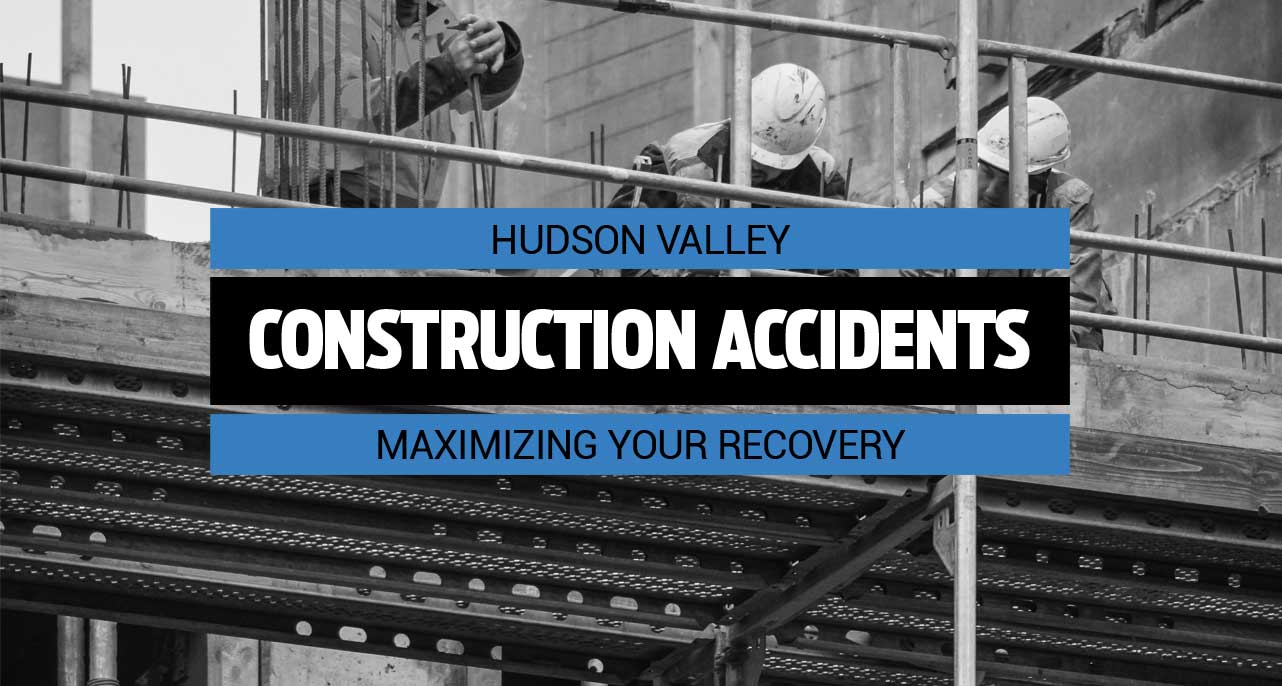
The Hudson Valley is undergoing a massive development boom. Job sites across Ulster, Dutchess, and Orange counties are moving at breakneck speeds. However, when contractors prioritize tight deadlines over safety protocols, catastrophic injuries follow.
Construction work is inherently dangerous, but New York provides some of the strongest legal protections for workers in the country. If you suffer a severe injury while working on a local site, relying solely on Workers’ Compensation could be a mistake.
Here is what every Hudson Valley construction worker needs to know about their right to file a potential high-value third-party lawsuit under New York’s strict labor laws.
The Limits of Workers’ Compensation on the Job Site
If you are injured while performing your duties—whether you are laying block, pouring concrete, or assembling heavy prefabricated walls like Structural Insulated Panels (SIPs)—Workers’ Compensation will cover your medical bills and a portion of your lost wages.
However, Workers’ Comp has two massive drawbacks:
- It does not compensate you for physical pain and suffering.
- It prevents you from directly suing your own employer, even if their negligence directly caused the accident.
To secure maximum financial recovery, you need to look beyond your direct employer and file a Third-Party Lawsuit against the property owner or the general contractor. In New York, this is done primarily through Labor Law 240.
NY Labor Law 240: The “Scaffold Law” Explained
New York Labor Law 240(1), commonly known as “The Scaffold Law,” is a unique piece of legislation that holds property owners and general contractors strictly liable for gravity-related injuries on job sites.
You do not have to prove that the owner or contractor was actively negligent; you only have to prove that they failed to provide adequate safety equipment to protect you from the specific elevation hazard.
What qualifies as a gravity-related hazard? The law covers two primary scenarios:
- Workers Falling: This includes falls from improperly secured ladders, collapsed scaffolding, or unprotected roof edges.
- Objects Falling on Workers: This applies when heavy building materials are improperly hoisted or secured and fall onto a worker below. This is highly relevant when cranes or excavators are moving massive loads, such as dropping foundation piling into place, positioning steel beams, or lifting heavy timber frames.
If proper safety devices (like harnesses, hoists, safety nets, or bracing) were not provided or failed to work, the general contractor and property owner are legally responsible for the full extent of your damages.
NY Labor Law 241(6): Safety Code Violations
Even if your accident did not involve a fall or a dropped object, you may still have grounds for a third-party lawsuit under Labor Law 241(6).
This law requires site owners and general contractors to provide “reasonable and adequate protection and safety” to all workers. To win a claim under this section, your attorney must prove that a specific rule from the New York State Industrial Code was violated.
Common examples include:
- Tripping Hazards: Debris, scattered tools, or electrical cords left in active walkways.
- Chemical Exposure: Lack of ventilation or protective gear when handling toxic solvents or working in enclosed trenches.
- Equipment Malfunctions: Injuries caused by heavy machinery, table saws, or power tools that had their factory safety guards removed to speed up production.
The Immediate Steps to Take After a Job Site Injury
The general contractor’s insurance company will dispatch investigators to the scene immediately to minimize their liability. You must protect your case from day one:
- Report It Immediately: Tell your foreman or supervisor about the injury before you leave the site. Make sure an incident report is written and get a copy.
- Document the Hazard: If you are physically able, take photos of whatever caused your injury before it is cleaned up. Capture the broken ladder, the lack of safety netting, or the unsafe excavation trench.
- Get Contact Info: Secure the names and phone numbers of any coworkers or other subcontractors who witnessed the accident.
- Seek Immediate Medical Care: Go to the emergency room, even if you think the injury is manageable. You need an official medical record documenting that the injury occurred on the job site that exact day.
Don’t Leave Money on the Table
General contractors and their commercial insurance companies fight Labor Law claims aggressively. They will try to argue that you were the “sole proximate cause” of your own injury by refusing to use provided safety gear.
Defeating these tactics requires attorneys who understand the technical realities of construction—from interpreting blueprints and safety logs to understanding the physics of structural collapses.
At O’Connor & Partners, PLLC, we have a proven track record of securing multi-million dollar verdicts and settlements for Hudson Valley tradesmen. Contact our offices in Kingston, Poughkeepsie, or Newburgh today for a free, fully confidential consultation.