
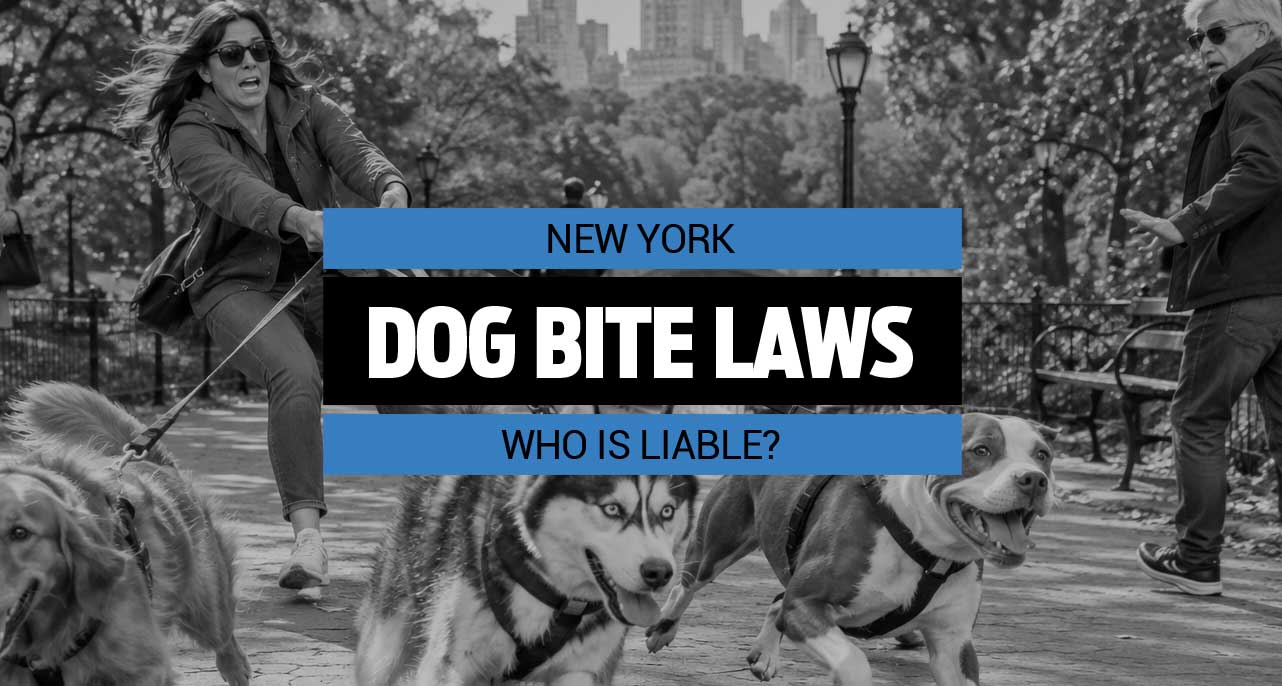
A dog attack can happen in seconds, but the consequences may last for years. A bite can cause deep wounds, permanent scarring, nerve damage, infection, emotional trauma and expensive medical treatment. For children, older adults and people who suffer severe facial injuries, the effects can be especially serious.
When a dog injures someone in New York, an important question follows: Who is legally responsible for the attack, and can the injured person recover compensation?
The answer depends on the circumstances. The dog’s owner may be liable, but a claim can also involve someone who kept or controlled the animal, a landlord or another party whose conduct contributed to the injury. New York law now permits claims based on both strict liability and ordinary negligence, although each theory has different requirements.
At O’Connor & Partners, PLLC, our dog bite injury practice focuses on helping injured people understand their legal options after an animal attack. This guide explains New York dog bite laws, how liability is established, what compensation may be available and what steps to take after an attack.
How Do Dog Bite Laws Work in New York?
New York has historically applied a rule that requires an injured person pursuing strict liability to establish that the dog had vicious propensities and that its owner knew or should have known about them.
However, the legal framework changed following the New York Court of Appeals decision in Flanders v. Goodfellow in 2025. The court recognized a two-pronged approach to animal-injury liability: a plaintiff may pursue strict liability based on known or reasonably knowable vicious propensities, or pursue a claim under ordinary negligence principles. Both theories may be available in an appropriate case.
The distinction matters. Evidence of a dog’s previous aggressive behavior can be important to a strict-liability claim, while a negligence claim focuses on whether a defendant failed to exercise reasonable care under the circumstances and whether that failure caused the injury.
The practical takeaway is that an injured person should not assume a claim is impossible simply because the dog has never bitten anyone before. The facts may support a negligence claim even when the evidence needed for strict liability is disputed.
1. When Is a Dog Owner Liable for a Dog Bite?
A dog’s owner is often the first person to investigate after an attack. Nevertheless, ownership alone does not automatically establish liability in every case. The applicable legal theory and the evidence matter.
Strict liability: What if the dog has bitten someone before?
For a strict-liability claim, the injured person generally must establish that the dog had vicious propensities and that the owner knew or should have known about them.
The phrase “vicious propensities” does not necessarily mean that a dog must have previously caused a serious injury. Courts can consider a broader range of behavior that indicates a tendency to act in a way that may endanger people.
Evidence may include:
- A previous bite or attack.
- Attempts to bite, snap at or lunge at people.
- Aggressive conduct that the owner observed or was told about.
- Warnings from veterinarians, trainers or other people familiar with the dog.
- The owner’s decision to restrain the dog because of its behavior.
- Other circumstances suggesting the owner knew or should have known about a risk.
A prior attack can be powerful evidence, but it is not the only type of evidence a court may consider.
Negligence: Can an owner be liable for a first-time attack?
Yes, potentially.
A negligence claim asks whether the defendant failed to exercise reasonable care and whether that failure caused the injury. Following Flanders v. Goodfellow, a dog bite victim may pursue this theory independently of, or alongside, a strict-liability claim when the facts support it.
For example, relevant circumstances might include an owner allowing a dog to run loose in a situation presenting an unreasonable risk, failing to take reasonable precautions after observing dangerous behavior, or disregarding applicable safety requirements.
The analysis is fact-specific. A dog causing an injury does not automatically prove that its owner was negligent. The injured person must establish the elements of the claim, including a duty of care, a breach, causation and legally recognized damages.
For the governing framework, see the official New York court decision in Flanders v. Goodfellow. The court’s decision is the key authority for understanding the modern two-pronged approach to animal-injury liability.
2. What If the Dog Has Never Bitten Anyone Before?
A first-time attack can raise difficult legal questions, but it does not automatically end the inquiry.
Under the traditional strict-liability rule, the absence of previous aggressive behavior may make it harder to establish that the owner knew or should have known about the dog’s vicious propensities.
However, the circumstances leading up to the incident may still support a negligence claim. For example, the investigation may reveal that the owner ignored a known safety risk or failed to take reasonable precautions in the circumstances.
The evidence might include witness accounts, video footage, prior warnings, the circumstances in which the dog was restrained or released, and any applicable local requirements.
There is also a distinction between recovering medical expenses and recovering additional damages such as lost income or pain and suffering. The available recovery depends on the facts, the applicable legal theory and any relevant statutory provisions. New York’s dangerous-dog statute contains specific rules concerning medical costs, but it should not be interpreted as creating automatic liability for every injury caused by any dog.
An attorney evaluating a first-time dog bite should therefore consider both strict liability and negligence rather than relying solely on whether the animal has bitten before.
3. Can a Landlord Be Held Responsible for a Dog Attack?
In certain circumstances, a landlord or property owner may also face liability when a dog injures someone on the premises.
The outcome depends on the person’s relationship to the animal, control over the property, knowledge of the relevant risk and the legal basis for the claim.
For example, a landlord who knows a tenant is keeping a dog that presents a danger may face questions about whether reasonable steps were available to address that risk. The fact that a landlord owns the building, however, does not automatically make the landlord responsible for every injury caused by a tenant’s dog.
Under strict-liability principles, courts have examined whether a landlord knew the dog was being kept on the premises, knew or should have known about its vicious propensities, and had sufficient control over the premises to remove or confine the animal.
A negligence claim requires a separate analysis of whether the landlord owed a duty of care, breached that duty and caused the injury.
Other potentially relevant facts include:
- Whether the property owner knew the dog was present.
- Whether complaints or warnings had been made.
- Whether the landlord had authority to address the dangerous condition.
- Whether the landlord controlled the area where the attack occurred.
- Whether a separate person actually owned, kept or controlled the animal.
An investigation should identify every potentially responsible party without assuming that property ownership alone establishes liability.
4. What If Someone Other Than the Owner Was Responsible for the Dog?
The dog’s legal owner is not necessarily the only person whose conduct matters.
Depending on the circumstances, another person may have been keeping, harboring or exercising control over the animal. Someone who was caring for the dog, supervising it or responsible for its handling may be relevant to the investigation.
A property manager or landlord may also need to be considered if the facts support a separate claim.
The legal requirements differ depending on the defendant and the theory of liability. A person who merely encountered the dog or happened to be present is not automatically responsible for an attack.
Identifying who had actual responsibility for the animal, who knew about the risk and who had the ability to take reasonable precautions can be important in determining whether a viable claim exists.
5. What Compensation Can You Recover After a Dog Bite in New York?
A dog attack can result in expenses and losses that continue long after the initial injury.
Depending on the evidence and applicable law, a successful personal injury claim may include compensation for several categories of damages.
Medical expenses
These may include emergency treatment, hospital care, surgery, medication, wound care, infection treatment and follow-up appointments. Future medical expenses may also be relevant when the injury requires continuing treatment.
Plastic surgery and scar treatment
Dog bites can cause substantial facial injuries, lacerations and permanent scarring. Some victims require reconstructive procedures or other treatment to address the physical consequences.
Lost wages
An injury may prevent someone from returning to work immediately or may require time away from employment for treatment and recovery. Documented lost income may be recoverable when supported by the facts and applicable law.
Reduced earning capacity
When injuries cause lasting physical limitations, they may affect a person’s ability to perform their job or earn income in the future. A claim may require evidence of the injury’s long-term impact.
Pain and suffering
Physical pain, permanent scarring, limitations on daily activities and other consequences may support a claim for non-economic damages where the applicable legal requirements are met.
Psychological effects
Some victims experience fear, anxiety or other psychological effects following an attack. The nature and extent of these injuries, along with the available evidence, can be relevant to a damages assessment.
Other related losses
Depending on the case, additional expenses or losses may be recoverable if they are legally recognized and adequately supported by evidence.
There is no standard settlement amount for a New York dog bite case. The value of a claim depends on factors such as the severity of the injury, the treatment required, the long-term consequences, the evidence of liability and the insurance coverage or assets available.
6. Does Homeowners Insurance Cover Dog Bite Injuries?
Homeowners or renters insurance may provide coverage for certain dog bite claims, depending on the policy and circumstances.
Coverage is not automatic. Policies can differ in their definitions, exclusions, limits and conditions. Some policies restrict coverage for particular circumstances or animals, and other insurance arrangements may apply.
An investigation may therefore need to identify:
- Whether the dog owner has homeowners or renters insurance.
- Whether the policy was in force on the date of the attack.
- Whether the incident falls within the policy’s coverage.
- Whether exclusions or limitations apply.
- Whether another potentially responsible party has relevant insurance.
An insurance policy can affect how a claim is handled and what resources may be available for compensation. The existence of insurance does not, by itself, establish that the insured person is legally liable.
An injured person should preserve relevant information and consider obtaining legal advice before signing a release or accepting a settlement that may affect future claims.
7. What Should You Do After a Dog Bite?
Taking sensible steps after an attack can protect your health and help preserve evidence.
Seek medical attention
Dog bites can cause puncture wounds, tissue damage and infection. Seek prompt medical evaluation, particularly for deep wounds, facial injuries, uncontrolled bleeding or signs of infection.
The Centers for Disease Control and Prevention’s dog-bite prevention and safety guidance provides public-health information about dog bites and prevention.
A medical professional can also assess whether rabies exposure or other preventive treatment needs to be considered.
Identify the dog and its owner
When it is safe to do so, obtain the owner’s name and contact information, as well as details about the dog. Do not put yourself at further risk trying to approach or restrain an aggressive animal.
If the owner is unknown or refuses to cooperate, record the available information and report the incident to the appropriate local authorities.
Report the incident
Depending on the circumstances, contact local animal control or law enforcement. Reporting may help establish a record of the incident and allow the appropriate authorities to address public-safety concerns.
New York’s Agriculture and Markets Law § 123 addresses dangerous-dog proceedings and related requirements.
Photograph the injuries
If possible, take photographs of the wounds and visible injuries over time. Keep copies of medical records, bills, prescriptions and documentation of follow-up treatment.
Preserve witness and video evidence
Write down what happened while your recollection is fresh. Keep the names and contact details of witnesses, and preserve any relevant photographs, messages, security footage or other recordings.
Do not assume that video footage will remain available indefinitely.
Keep records of financial losses
Save receipts, proof of missed work, treatment costs and other documentation related to the injury. These records may help establish the losses associated with the incident.
Understand the applicable deadlines
Personal injury claims are subject to statutes of limitation, and special rules can apply when a potential defendant is a municipality or another public entity. Notice-of-claim requirements may impose much shorter deadlines than an ordinary personal injury lawsuit.
Do not assume that the same filing deadline applies to every case. Prompt legal advice can help identify the rules relevant to your circumstances.
8. What Evidence Can Help Prove a Dog Bite Claim?
The outcome of a dog bite case often depends on the quality of the available evidence.
A thorough investigation may examine several sources of information.
Medical records: These document the nature of the injuries, treatment received and the medical consequences of the attack.
Photographs: Images of the injuries, clothing, location and any visible conditions surrounding the incident may help establish what happened.
Witness statements: Witnesses may be able to describe the dog’s behavior, the owner’s actions and the events immediately before the attack.
Prior complaints or incidents: Evidence of earlier attacks or aggressive behavior may be relevant to whether the owner knew or should have known of the dog’s vicious propensities.
Video footage: Security cameras, doorbell cameras and other recordings may capture the attack or the events leading up to it.
Animal-control records: Prior complaints or official records may help establish relevant facts about the dog or its history.
Insurance documents: Relevant policy information may help identify potential coverage for a claim.
Not every case will involve all of these forms of evidence. The appropriate investigation depends on the specific facts, the disputed issues and the legal theory being pursued.
9. Can the Dog Bite Victim Be Partly Responsible?
The circumstances of an attack can affect the outcome of a claim.
For example, evidence concerning provocation, the victim’s conduct, whether the person was lawfully present and the circumstances in which the dog was approached may be relevant, depending on the facts and applicable law.
New York follows a comparative-negligence framework in many personal injury cases. Generally, a claimant’s culpable conduct generally does not automatically bar recovery, although it can reduce damages in proportion to the claimant’s share of responsibility.
The application of that rule to a particular animal-injury claim depends on the legal theories and circumstances involved. Other defenses or statutory provisions may also be relevant.
The presence of a possible defense does not automatically mean an injured person has no claim. The evidence must be evaluated in context.
10. What If a Child Is Bitten by a Dog?
Dog attacks involving children can be especially serious. A child may suffer facial injuries, permanent scarring, emotional trauma or other consequences that require continuing care.
When a child is injured, the investigation may need to consider the circumstances of supervision, the dog’s behavior, the actions of the adults responsible for the animal and the child’s age and conduct.
Parents or guardians should seek appropriate medical attention, preserve relevant evidence and keep records of treatment and expenses.
Claims involving minors may also be subject to special procedural rules. The deadline for a child’s claim should never be assumed without reviewing the applicable law and circumstances.
Where an injury has lasting effects, the assessment of damages may need to consider future medical treatment, scarring, psychological consequences and other long-term impacts.
11. How Long Do You Have to File a Dog Bite Lawsuit in New York?
The time available to bring a lawsuit depends on the nature of the claim and the parties involved.
Many New York personal injury claims are subject to a three-year limitations period, but exceptions and special rules may apply. Claims involving public entities, minors or other particular circumstances may have different requirements.
A deadline may also depend on when the claim accrued and the precise legal basis for the action.
Because missing a deadline can prevent a person from pursuing compensation, it is important to identify the applicable limitations period promptly rather than relying on a general rule.
An attorney can review the facts and determine which deadlines, notice requirements and procedural rules may apply.
12. Why Speak With a New York Dog Bite Attorney?
A dog bite claim may involve more than establishing that an injury occurred.
The legal team may need to investigate the dog’s history, determine who owned or controlled the animal, identify relevant insurance policies, evaluate potential negligence and document the full extent of the injury.
Legal guidance can be particularly valuable when liability is disputed, injuries are severe, permanent scarring is involved or an insurer challenges the value of the claim.
An attorney can also help identify whether the evidence supports strict liability, negligence or both, under the current New York legal framework.
O’Connor & Partners, PLLC represents injured people in dog bite and other personal injury matters. Learn more about the firm’s New York dog bite injury representation or contact the firm for a case review.
Dog Bite Claims in the Hudson Valley
Dog attacks can happen in private homes, apartment buildings, public spaces and other locations throughout New York. The circumstances of the incident determine which legal questions must be addressed.
O’Connor & Partners serves injured clients throughout the Hudson Valley, including Kingston, Newburgh and Poughkeepsie.
For people in Dutchess County, the firm’s Poughkeepsie personal injury office provides a local point of contact for discussing a potential injury claim.
The firm also has a Kingston dog bite attorney practice page with information about dog and animal attack claims in New York.
Whether an attack happened at a neighbor’s home, in a shared residential area or while someone was visiting another property, a careful review of the circumstances can help determine whether a claim may be available.
Frequently Asked Questions About New York Dog Bite Laws
Does New York have a one-bite rule?
No. New York’s traditional strict-liability rule requires evidence that the dog had vicious propensities and that its owner knew or should have known about them. However, the Court of Appeals’ 2025 decision in Flanders v. Goodfellow also allows an injured person to pursue a claim based on ordinary negligence when supported by the facts. A previous bite is not the only fact that can matter.
Can I sue if the dog has never bitten anyone before?
Yes. A first-time attack may make a strict-liability claim more difficult if there is no evidence of known vicious propensities, but the circumstances may support a negligence claim. The answer depends on the available evidence and applicable law.
Can I recover compensation for a dog bite that did not require surgery?
Yes. The severity of an injury affects the evaluation of damages, but the need for surgery is not the sole measure of whether a claim exists. Medical expenses and other losses may be relevant, depending on liability and the applicable legal requirements.
Can a landlord be responsible for a tenant’s dog bite?
Yes. The landlord’s knowledge, control of the premises, relationship to the dog and duty of care may be relevant. Owning the property alone does not automatically establish liability.
What if the dog owner is a friend or relative?
The legal analysis is based on the facts and applicable law, not simply on the personal relationship between the parties. Homeowners or renters insurance may provide coverage in some cases, subject to policy terms and exclusions.
How much is a dog bite case worth in New York?
There is no fixed amount. The potential value depends on the injuries, treatment, permanent effects, lost income, other damages, evidence of liability and available insurance coverage.
What should I do if a dog bites my child?
Seek prompt medical attention, document the injuries, identify the dog and owner when safe, preserve relevant evidence and report the incident to the appropriate authorities. Consider obtaining legal advice about the child’s rights and any deadlines that apply.
Where can I find New York’s official dog laws?
The New York State Senate’s official Agriculture and Markets Law § 123 covers dangerous dog proceedings and related statutory requirements. Court decisions interpreting liability principles are available through the New York State Law Reporting Bureau.
Speak With O’Connor & Partners About a Dog Bite Injury
A dog attack can leave an injured person facing medical bills, lost income, permanent scarring and uncertainty about what happens next. Understanding the legal options available can help clarify the next steps.
O’Connor & Partners, PLLC represents individuals who have suffered injuries in dog attacks and other personal injury incidents throughout the Hudson Valley and New York.
To discuss the circumstances of an injury, visit the firm’s dog bite injury practice page or contact O’Connor & Partners for a case review.
This article provides general information about New York law and is not legal advice. The outcome of an individual case depends on its specific facts, the applicable law and the available evidence.